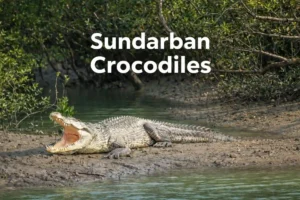
Sundarban Forest Animals and Delta Wildlife

The Sundarbans, the world’s largest mangrove forest and a UNESCO World Heritage Site, is home to one of Earth’s most unique ecosystems. This vast delta spreads across West Bengal and Bangladesh, covering nearly 10,000 square kilometers, and harbors an extraordinary variety of animals. When travelers ask, “Sundarban National Park is famous for which animal?”, the answer is always the Royal Bengal Tiger 🐅. But beyond the tiger, the mangrove forests are full of life — crocodiles, spotted deer, monkeys, dolphins, lizards, snakes, and much more.

This blog will explore all the Sundarban forest animals, highlighting common sightings, rare species, and fascinating wildlife adaptations.
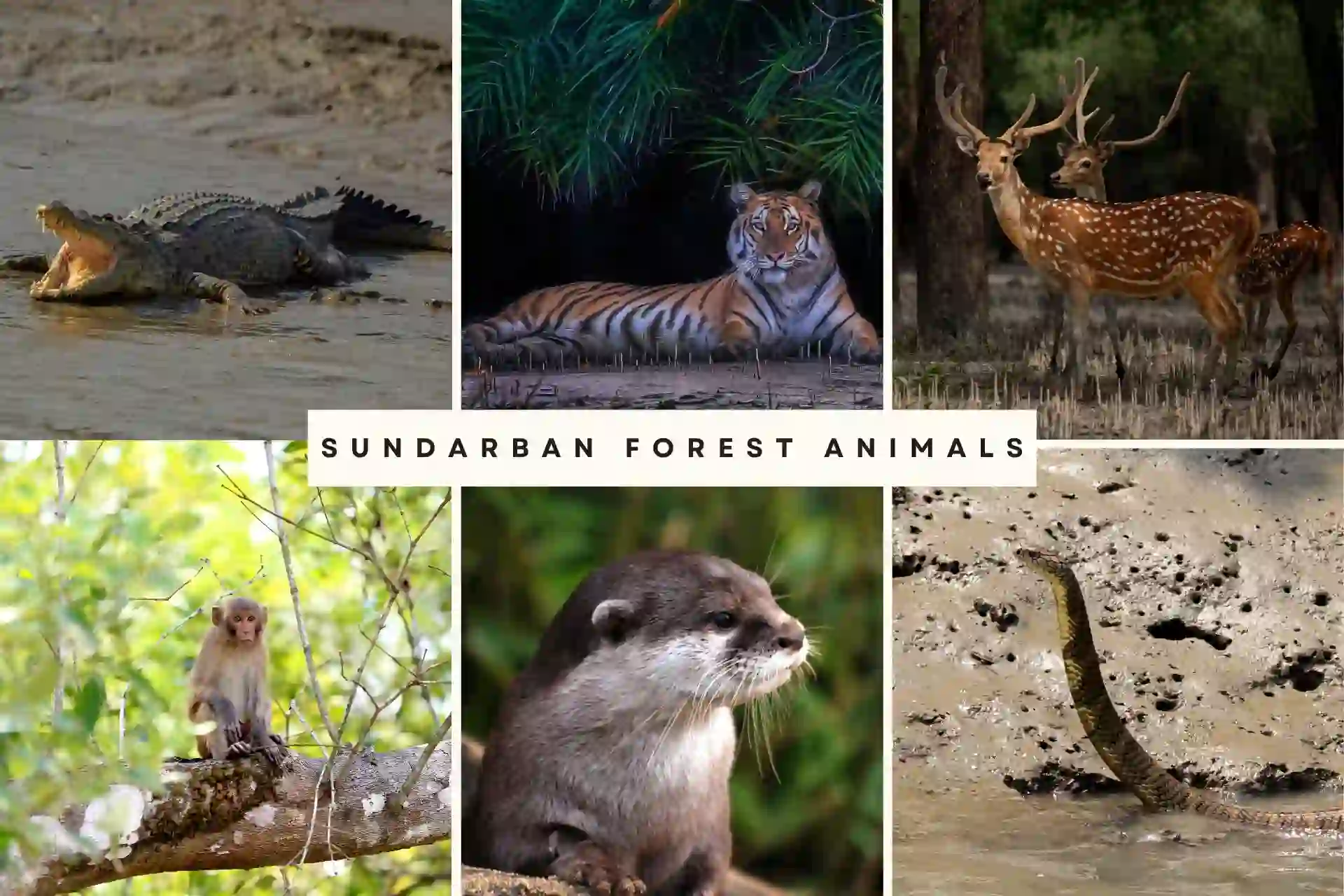
Collage of Sundarban forest animals including Royal Bengal Tiger, crocodile, spotted deer, king cobra, monkey, and otter in delta wildlife

Mammals of Sundarban Forest

Royal Bengal Tiger 🐅

The Royal Bengal Tiger (Panthera tigris tigris) is the crown jewel of the Sundarban animals. This is the only mangrove forest in the world where tigers live, making it truly unique. Unlike mainland tigers, these big cats are excellent swimmers and are often seen crossing rivers.

  • Estimated population: 96–100 tigers in Indian Sundarban

  • Adaptations: hunting fish, crabs, and deer in mangrove waters

  • Tourist note: spotting is very rare, but the thrill of being in tiger territory makes every safari exciting.

Spotted Deer (Chital) 🦌

The spotted deer (Axis axis) is the most common animal in Sundarbans. Guests almost always see them grazing near the forest edge. They are the main prey for tigers and crocodiles, with a population of several thousands spread across the delta.

Playful Monkeys 🐒

Monkeys are found everywhere in Sundarbans. Visitors enjoy watching their playful nature — jumping on trees, stealing food, and sometimes even surprising tourists on boats. They are among the most commonly spotted Sundarban animals.

Wild Boar and Cats

  • Wild Boar (Sus scrofa): Often found digging near forest floors; important prey species.

  • Fishing Cat (Prionailurus viverrinus): Medium-sized wild cat specialized in catching fish and crabs.

  • Jungle Cat (Felis chaus) & Leopard Cat (Prionailurus bengalensis): Rarely seen but recorded in camera traps.

  • Otters (Lutrogale perspicillata): Sometimes spotted playing in creeks — guests at Panchamukhani have seen them with joy.

Reptiles of Sundarban Delta

Saltwater Crocodiles 🐊

The saltwater crocodile (Crocodylus porosus) is the largest reptile in the world. In Sundarbans, they can reach 20 feet long and weigh over 1,000 kg. In winter, tourists often see them basking on mudflats near creeks. At other times, they remain hidden in water, waiting patiently for prey.

Water Monitor Lizards 🦎

Water monitor lizards (Varanus salvator) are massive reptiles, sometimes mistaken for crocodiles because of their size. Growing up to 3 meters, they are commonly spotted walking near the banks, making them one of the most surprising Sundarban forest animals for tourists.

Snakes and Turtles 🐍🐢

The Sundarbans are home to several snakes and turtles, including:

  • King Cobra (Ophiophagus hannah): The world’s longest venomous snake.

  • Indian Python (Python molurus): A large non-venomous constrictor.

  • Olive Ridley Turtle (Lepidochelys olivacea): An endangered sea turtle species.

  • Batagur baska Turtle: A critically endangered freshwater turtle found in Sundarban creeks.

Aquatic and Delta Animals

Dolphins in Sundarban 🐬

The rivers of Sundarbans are home to two species of dolphins:

  • Gangetic Dolphin (Platanista gangetica): Freshwater dolphin, playful and friendly.

  • Irrawaddy Dolphin (Orcaella brevirostris): Shy and found in estuarine waters.

Guests at Panchamukhani often report thrilling moments when dolphins swim alongside boats, jumping gracefully in and out of the water.

Fish, Crabs, and Prawns 🦀🐟

  • Over 170 fish species, including hilsa during monsoon.

  • 40+ species of crabs, such as colorful fiddler crabs.

  • 25 species of prawns, making this delta rich in marine resources.

These aquatic animals form the food base of the ecosystem and support the livelihoods of thousands of local fishermen.

Biodiversity of Sundarban Animals

According to the Zoological Survey of India, Sundarbans host:

  • 42+ mammal species

  • 35–59 reptile species

  • 120–210 fish species

  • 270+ bird species (though birds will be covered in another blog)

This makes the Sundarbans one of the richest biodiversity hotspots in the world.

FAQs about Sundarban Animals

Q1: Sundarban national park is famous for which animal?

The Sundarban National Park is most famous for the Royal Bengal Tiger, the only tiger population living in mangrove forests.

Q2: What are the most common animals found in Sundarbans?

Spotted deer, monkeys, and water monitor lizards are most common. Crocodiles are often seen in winter, and dolphins can be spotted in rivers.

Q3: Are tiger sightings common in Sundarbans?

No, tiger sightings are rare. But travelers often see deer, monkeys, crocodiles, dolphins, and other animals during safaris.

Q4: Which reptiles are found in Sundarban delta animals?

Saltwater crocodiles, water monitor lizards, king cobra, Indian python, and several turtles including Olive Ridley and Batagur baska.

Q5: Can tourists photograph Sundarban forest animals?

Yes, but with caution. Animals may appear suddenly, so always keep your camera ready. Use zoom lenses instead of moving closer for safety. 

Conclusion 🌿

The Sundarban forest animals form a living laboratory where land and sea meet in harmony. From the majestic Royal Bengal Tiger 🐅 to playful monkeys 🐒, giant crocodiles 🐊, and rare dolphins 🐬, every creature contributes to this delicate ecosystem. The biodiversity of the delta is not just unique to India, but to the entire world.

If you are ready to witness these animals in their natural habitat, plan a sundarban tour package with a trusted organizer. Sundarban Mondal Travels, a government-recognized and MSME-registered tour operator, has guided thousands of travelers safely through these mangroves.

👉 Book your Sundarban tour today and experience the magical wildlife of the delta.

Book Now